
Doss Tips and Tricks for Item Writing
LEARN MORE
Doss Tips and Tricks for Item Writing
Dear Item Writing Volunteers,

Tips and Trick for Item Writing
I’ve been writing exam items for a number of years, and the following tips and tricks are based on my own experience. The first thing I learned writing exam items was that it is much more difficult than I anticipated! These tips and tricks are centered on choosing concepts for your questions, writing distractors, and using concise wording without plagiarizing. The tip list at the end summarizes the information in the paragraphs below and includes some additional tips and tricks.
Choosing a Concept Around Which to Frame a Question.
I have three tips for choosing a concept around which to frame a question. The first is to choose a concept from the ABC Need-to-Know criteria. The second tip is to base the question on information from a reference book on the ABC reference list for that exam. Thirdly, choose a concept that an operator really needs to know and understand to be competent at their job. When reading through a reference book, I sometimes have a tendency to frame a question around an obscure fact. Don’t fall into this trap! Be certain the information is necessary for a competent operator, not nice-to-know, or an interesting obscure fact.
Writing Good Distractors
For me, the hardest part of writing items is writing legitimate, totally wrong distractors. Directions to candidates typically instruct them to select the best answer. You need to insure that the distractors are truly incorrect, but not totally off the wall.
Math problems are easier in this regard. My tricks for math distractors: If the formula includes A/B, use B/A for one distractor. If the formula includes a conversion factor (converting cubic feet to gallons, for example), leave that step out for one of the distractors. Another way to get an interesting wrong answer is to work the formula on a calculator without adhering to the proper order of operations. Many times operators will plug the numbers into the calculator as they come to them rather than following the order of operations rule, yielding an incorrect answer. That incorrect number is a great distractor.
Use Concise Wording; Don’t Plagiarize.
A big tip for writing both stems and distractors is use concise wording. Many of us (including me) tend to be narrative in our writing; we want to write a mini story. Be concise with exam items. After you write an item, read through it to see if you can shorten it.
Example initial stem: The lead operator at a wastewater treatment plant has noticed that the solids content of the sludge has increased, but the polymer being used does not seem to be working as well as it was before. The operator decides to increase the dose. The polymer is fed by a piston metering pump. What can the operator do to increase the polymer dose?
Revised stem: If polymer is being fed by a piston metering pump, what can an operator do to increase the dosage?
Lastly, when using information in a reference to formulate an exam item, don’t plagiarize. Put the information in your own words. One method to help with this is to use a key word outline. For each sentence in the paragraph, write three key words. Use the key word outline to rewrite the paragraph in your own words. Take the wording from your new paragraph to write the question.
Tip List:
- Pick concepts from the Need-to-Know criteria.
- Base all questions on material in a reference book from the ABC list.
- Write items pertaining to necessary skills, not obscure trivial facts.
- Choose distractors that
- are definitely wrong;
- use terminology pertinent to our field; and
- work grammatically with the stem.
- Write concise stems and distractors.
- Use the conversion factors on the ABC Formula/Conversion Table when writing math items.
- Make all distractors close to the same length.
- Do not plagiarize.
- Do not use colloquial or regional terms and phrases (y’all; all y’all).
- Do not use made-up words (even if they sound really cool).
- Do not use negative questions:
- Which one does not…
- All do this except…
- Do not use gender pronouns (the operator instead of he or she)
- Do not overlap ranges in choices (1 – 5; 3 – 10; 7 – 12; instead use 1 – 4; 5 – 9; 10 – 12)
Self-Help and Instructional Videos
LEARN MORE
Self-Help and Instructional Videos
Item Writing Training
Watch Video
Item Submission Training
Watch Video
The password for the two videos listed above is: Primrose*202402
ABC Item Writing Training Meeting Recording
Watch Video
Item Writer’s Assets
LEARN MORE
Item Writer’s Assets
Download These Assets
Download These Exam Content Outlines
Sites for Reference Material
LEARN MORE
Sites for Reference Material
Distribution
Wastewater Treatment
- Activated Sludge and Nutrient Removal
- Operation of Extended Aeration Package Plants
- Operation of Nutrient Removal Facilities
- Operation of Water Resource Recovery Facilities-MOP11
- The Chlorination Dichlorination Handbook
- Wastewater Biology
- WEF Wastewater Treatment Fundamentals I – Liquid Treatment.
- WEF Wastewater Treatment Fundamentals II – Solids Handling and Support Systems
- WEF Wastewater Treatment Fundamentals III – Advanced Treatment
- WEF Basic Laboratory Procedures
Water Treatment
Collection
Standard Methods
- Part 1000 Introduction
- Part 2000 Physical and Aggregate Properties
- Part 3000 Metals
- Part 4000 Inorganic Nonmetallic Constituents
- Part 5000 Aggregate Organic Constituents
- Part 6000 Individual Organic Compounds
- Part 7000 Radioactivity
- Part 8000 Toxicity
- Part 9000 Microbiological Examination
- Part 10000 Biologic Examinations
The password for the Standard Methods and WEF documents listed above is: 2021ItemWriting
Sacramento State – Office of Water Programs – Reference Materials
All OWP materials are available through the Pearson ebook website.
On the following page, locate the manual you wish to access and click the green “Sign in/Register” button.
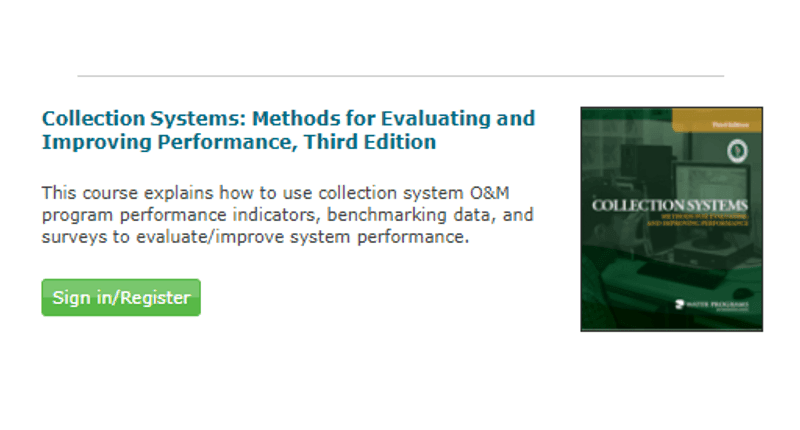
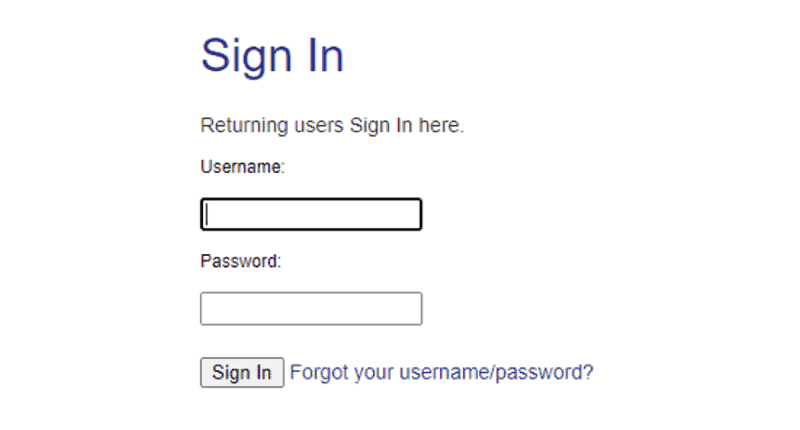
Please click sign in, and enter the credentials:
Login: WPI1
Password: Water123
The following OWP titles are available through this platform:
- Operation and Maintenance of Wastewater Collection Systems, Volume 1
- Operation and Maintenance of Wastewater Collection Systems, Volume 2
- Operation of Wastewater Treatment Plants
- Small Water System Operation and Maintenance
- Water Distribution System Operations and Maintenance
- Water Treatment Plant Operation, Volume 1
- Water Treatment Plant Operation, Volume 2
ABC Financials
LEARN MORE
Dates to Remember
LEARN MORE
Dates to Remember
September 13th – 16th, 2021
Board Meeting in Portland, Maine
October 16th – 20th, 2021
Weftec
October 18th – 20th
ASDWA
January 16, 2022
Arrive in NM
January 17, 2022
Board meeting
January 18-21, 2022
ABC Conference, Hotel Tamaya
Board Meeting Agenda
LEARN MORE
Board Meeting Agenda
Elizabeth and Paul to Welcome
Introductions
8:00 AM – 4:30 PM – Branding Health Index and Market Analysis
7:30 AM – 8:30 AM BOD: CEO Review opt
8:15 AM – 8:30 AM C2EP: Tellers for ABC Elections
8:30 AM – 10:00 AM: Board Generative Discussion on Branding
10:00 AM – 3:00 PM: Board and Commission Meeting
- Call to Order | Williams
- Welcome & Opening Remarks | Williams
- Board of Directors Consent Agenda | Williams
- Board of Directors Meeting Minutes
- FY 2021 Year-to-Date Financial Statements
- CEO evaluation and compensation as finalized (pending completion beforehand)
- Governance
- Board of Directors Election Results | Solvie
- Branding Decisions
- P&P revisions | Bishop
- Financial Overview
- FYE 2021 Auditor | Bishop
- FYE 2022 Budget | Bishop
- Board of Directors Consent Agenda | Williams
BREAK – 20 minutes
- Organizational Strategies
- Credentialing
- Exam Development | Healy
- Certification/PO | Vanness
- Plant Point Rating System | Bishop/Baton Global
- Advocacy
- 2021 Awards | Bishop
- AWWA Report | Weikel
- WEF Report | Kyle
- Outreach & Member Visits | Bishop
- 2022 Meeting Schedule | Bishop
- January Commission and Board Meeting
- Innovation in Certification 2022
- September 2022 Board Meeting
- Credentialing
Closing Message & Adjournment | Williams
Meet the DJG Team
LEARN MORE